ServicesIron and Sulfur Removal
Iron and Sulfur Removal in Bastrop
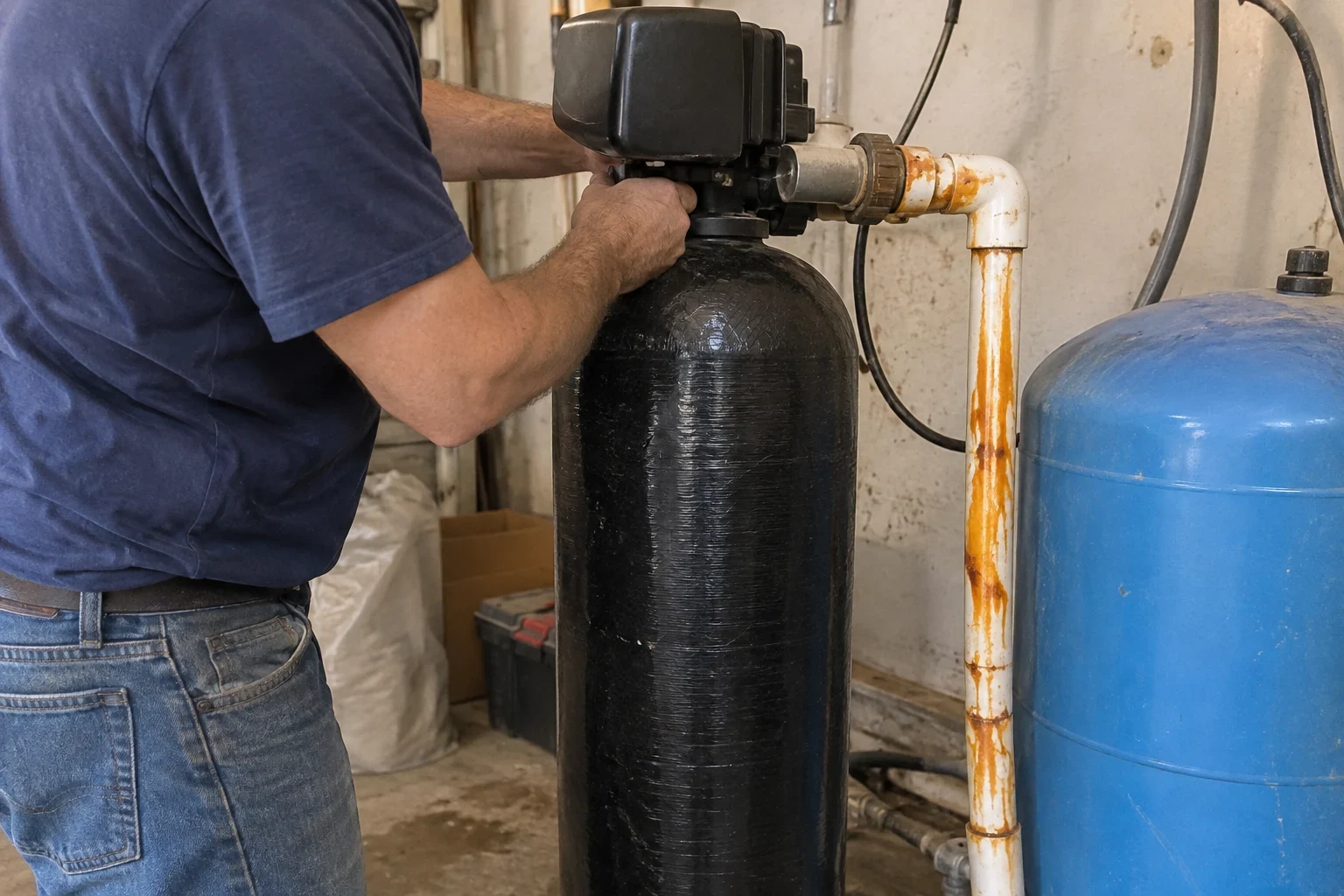
Rust rings in the toilet bowl, dark specks in the sink, water that smells like rotten eggs. We pin down which type of iron or sulfur is behind it, then put in an oxidizing filter sized for your water and plumbed to keep running for years.
How iron and sulfur removal works
Iron shows up in three forms. Ferrous iron is dissolved, so water pours clear and turns orange after it sits. Ferric iron is already oxidized and comes out rusty. Iron bacteria leave a red, slimy film in toilet tanks. Hydrogen sulfide is a dissolved gas, and even a small amount gives water that rotten-egg smell.
The fix for all of them is the same principle: oxidize the dissolved iron, manganese or sulfide into a solid particle, then trap it in a media bed that backwashes itself clean. Around Bastrop, Smithville and Cedar Creek, plenty of homes draw from private wells, and that is where these problems turn up most often.
Most of what decides whether a system lasts happens at install: sizing the tank to your flow rate, matching the backwash to what your pump can deliver, and running the drain correctly. That is the part we take the most care with.
What the installation includes
- A water test before anything is sold
- We measure iron, manganese, hydrogen sulfide, pH and hardness. Iron oxidizes poorly when pH sits below about 7, so acidic water changes the equipment we recommend.
- An oxidizing filter matched to your load
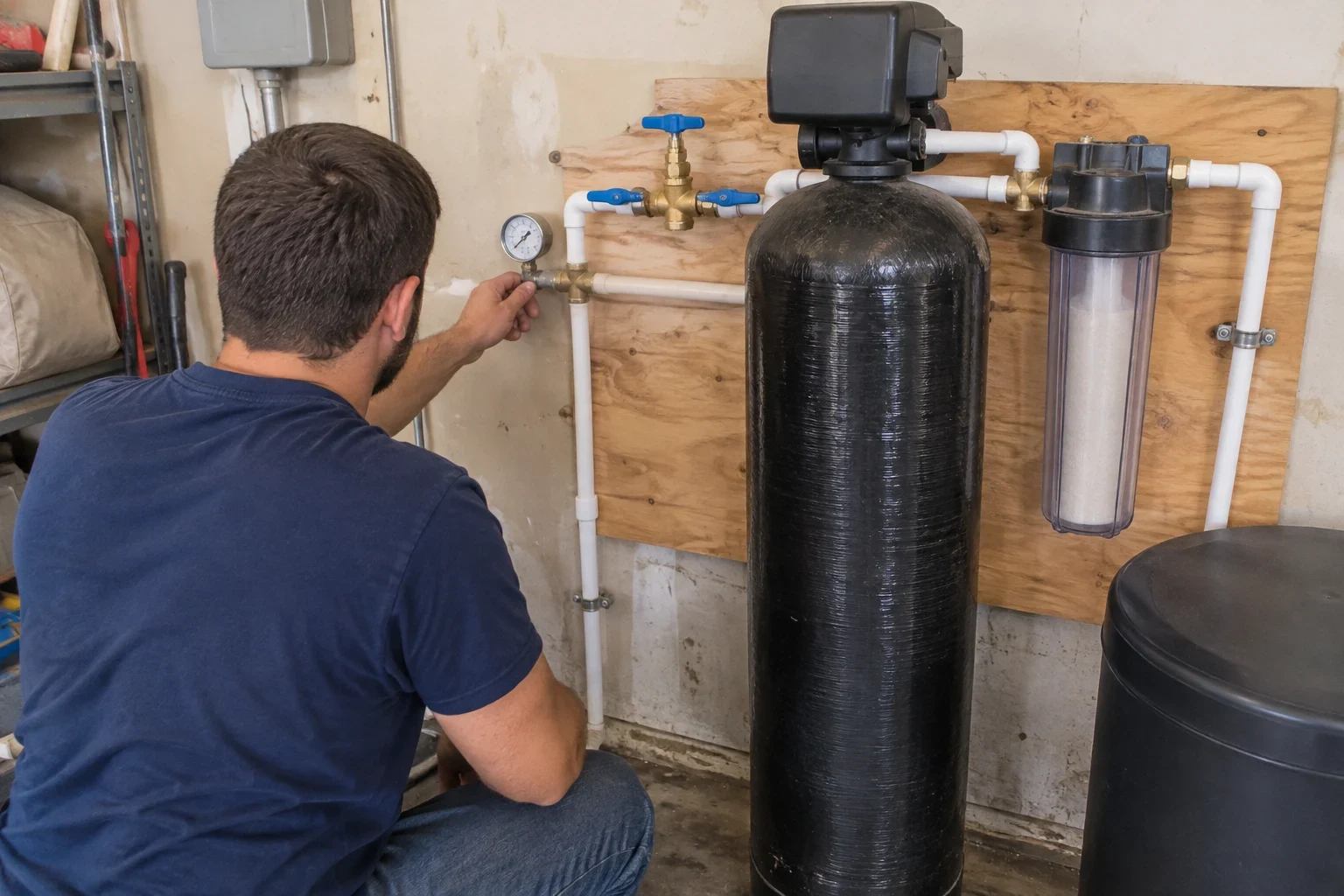
- For moderate iron and sulfur we usually fit an air-injection oxidizing filter. It keeps a pocket of air at the top of the tank and uses no chemicals. Heavier loads may call for a specialty catalytic filter media, or a chlorine or peroxide feed with a contact tank.
- Backwash checked against your pump
- A media bed needs a set flow, in gallons per minute, to lift and rinse itself. We measure what your pump really delivers before we pick the tank size. Too little backwash flow is the most common reason iron filters clog and stop working.
- Bypass valve and pressure gauges
- We plumb in a bypass so you still have water during service, plus a gauge on each side of the filter. When the gap between the two readings starts to grow, the media needs attention, often before you would notice anything at the tap.
- A properly run drain line
- Backwash water goes to a drain through a line sized for its flow. The end of that line stops short of the drain opening with open space between them, so dirty rinse water has no route back into your plumbing. If metal pipe was carrying your electrical ground, we add a bonding jumper across the new section.
Clues that iron or sulfur is in your water
Orange or brown staining
Rings of orange or brown in toilets, tubs and on fixtures come from iron. Bleach usually sets the stain rather than lifting it.
Black specks or gray marks
Manganese often travels with iron and leaves dark deposits in sinks and on clothes.
Rotten-egg odor
Hydrogen sulfide causes that smell. If you only notice it at hot taps, the water heater's magnesium anode rod may be reacting with sulfate, and replacing the anode can solve it without any filter. We will tell you if that applies to your home.
Water that clouds yellow
If water comes out clear and turns yellow in the glass after a few minutes, dissolved ferrous iron is reacting with air.
Slime inside the toilet tank
A reddish, gel-like film suggests iron bacteria, which need a different treatment than regular iron.
What sets the price
Price mostly follows how much iron and sulfur is in your water and how much water your home uses at once. After testing, we price each item on its own line so you can see what each part does. Installation is free.
Iron, manganese and sulfide levels
Higher readings need a larger media bed or a chemical feed with a contact tank, so there is more equipment.
House size and peak demand
More bathrooms push peak demand up, so a larger tank and valve are needed to hold pressure steady.
Correcting low pH
Acidic water may need a calcite neutralizer ahead of the iron filter so the oxidation step can work.
Work space and drain access
Labor goes up with a long run to a usable drain, a tight equipment area or old galvanized pipe that has to be rerouted.
From the test to a working filter
- 1
Water test at no charge
We sample at the kitchen faucet and where the line enters the house, and we measure your pump's flow and pressure.
- 2
A straightforward recommendation
Your written quote lists the equipment and why it suits your readings. If something simpler will solve it, we tell you.
- 3
The install
We turn off the water, add the bypass, set the tank level, run the drain line and schedule backwash for the overnight hours. It usually takes part of a day, and we leave the area clean.
- 4
Follow-up test and walkthrough
After the media settles and runs its first backwash cycles, we test the treated water again and show you the bypass, gauges and settings.
Questions about iron and sulfur filters
Will a softener take care of iron?
It can pull out a little dissolved ferrous iron, but the iron slowly fouls the resin and sulfur goes straight through. For more than a trace, an oxidizing filter placed before the softener keeps it working. Our Water Softener Installation page explains how the two go together.
Do air-injection filters put chemicals in the water?
No. Air pulled in during each backwash does the oxidizing of iron and sulfide. We only suggest a chemical feed when your test shows levels that air cannot handle.
How much upkeep is involved?
The backwash runs by itself. Look over the air injector and gauges once a year. The media wears out in time, on a schedule set by how much iron it handles, and the pressure gauges show you when that point is near.
Will my current stains go away?
No. The filter keeps new stains from forming, but rust already on fixtures has to be cleaned off with an iron cleaner. After treated water is running, those stains do not return.
I only smell it from the hot tap. Is this the right fix?
Possibly not. A smell only on the hot side often traces to the water heater's anode rod rather than sulfur in the supply. Our test tells the two apart so you skip a filter you do not need.
Find out what is in your water
We test for iron, manganese, sulfide and pH at no charge, then quote a system sized to the results.