ServicesUV Water Purification
UV Water Purification for Bastrop Homes
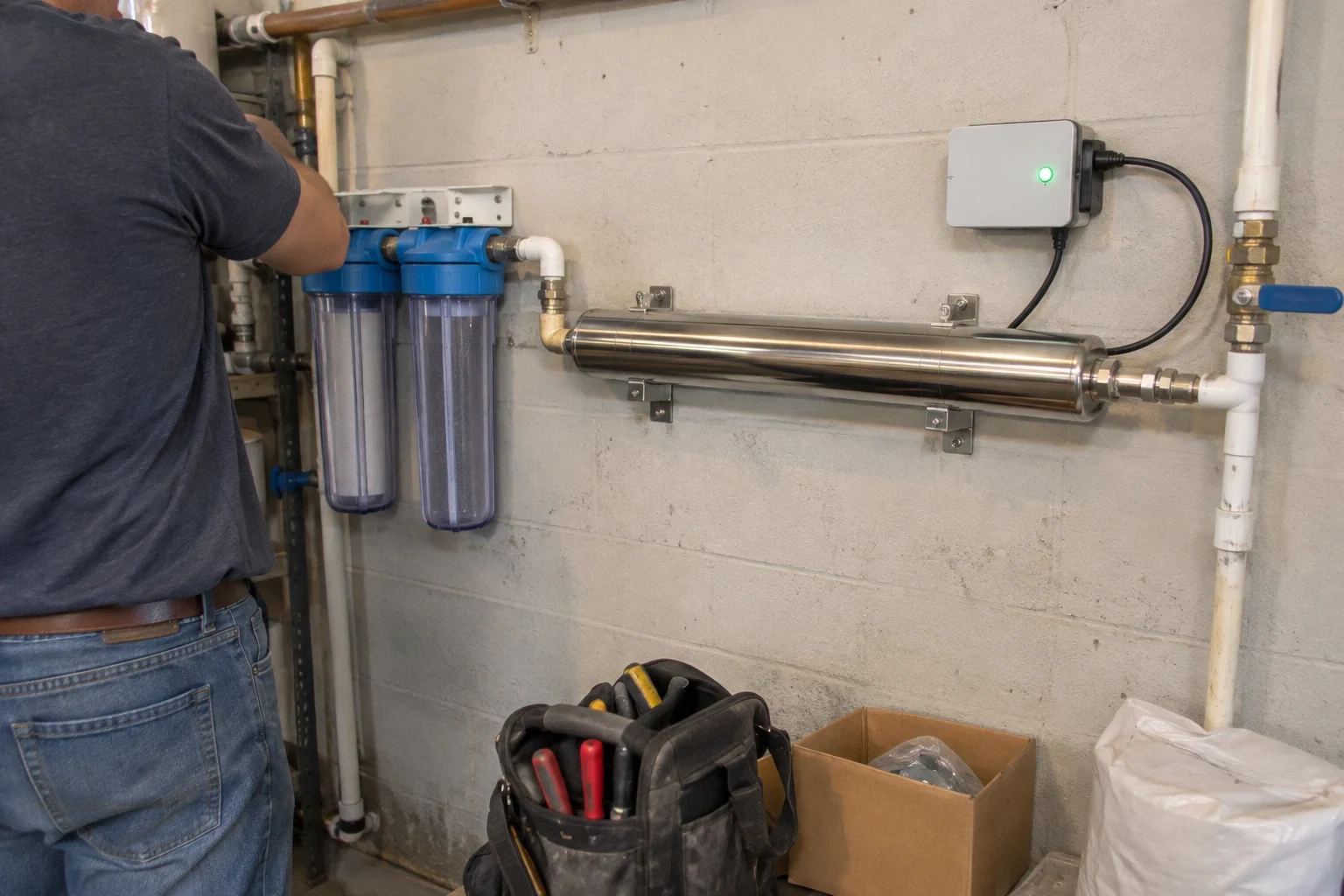
As water flows past a UV-C lamp, bacteria, viruses and cysts are inactivated, and nothing is added to the water. We match the chamber to the flow your home really uses, put the right filtration in front of it, and mount it where the lamp and sleeve are simple to service.
What UV Purification Does, and What It Doesn't
Inside a UV unit is a stainless steel chamber with a low-pressure mercury lamp sealed in a quartz sleeve. The lamp emits UV-C light at about 254 nanometers, which damages the DNA of microorganisms so they can't reproduce. That covers coliform bacteria, E. coli, viruses, and chlorine-resistant cysts like Giardia and Cryptosporidium. Water passes through in a second or two, and nothing is added to it.
UV does not remove chlorine, lead, iron, hardness or sediment, and it won't change taste or odor. It works best as the last stage after filtration. That is why we test first, then recommend UV only when your water source or test results call for disinfection. For taste and chemical concerns, whole-home filtration or reverse osmosis systems are the better fit.
Most of our UV work around Bastrop, Smithville and Cedar Creek is for homes on private wells, cisterns or rainwater collection, plus households that want a disinfection layer after a boil-water notice.
What Goes Into a Lasting UV Installation
- 01
Sizing to flow, not to the box
A UV unit is rated for a maximum gallons-per-minute at a set UV dose. If water moves faster than the rating, it gets too little exposure. We check your fixture count and peak demand, then choose a chamber with headroom.
- 02
Pretreatment ahead of the lamp
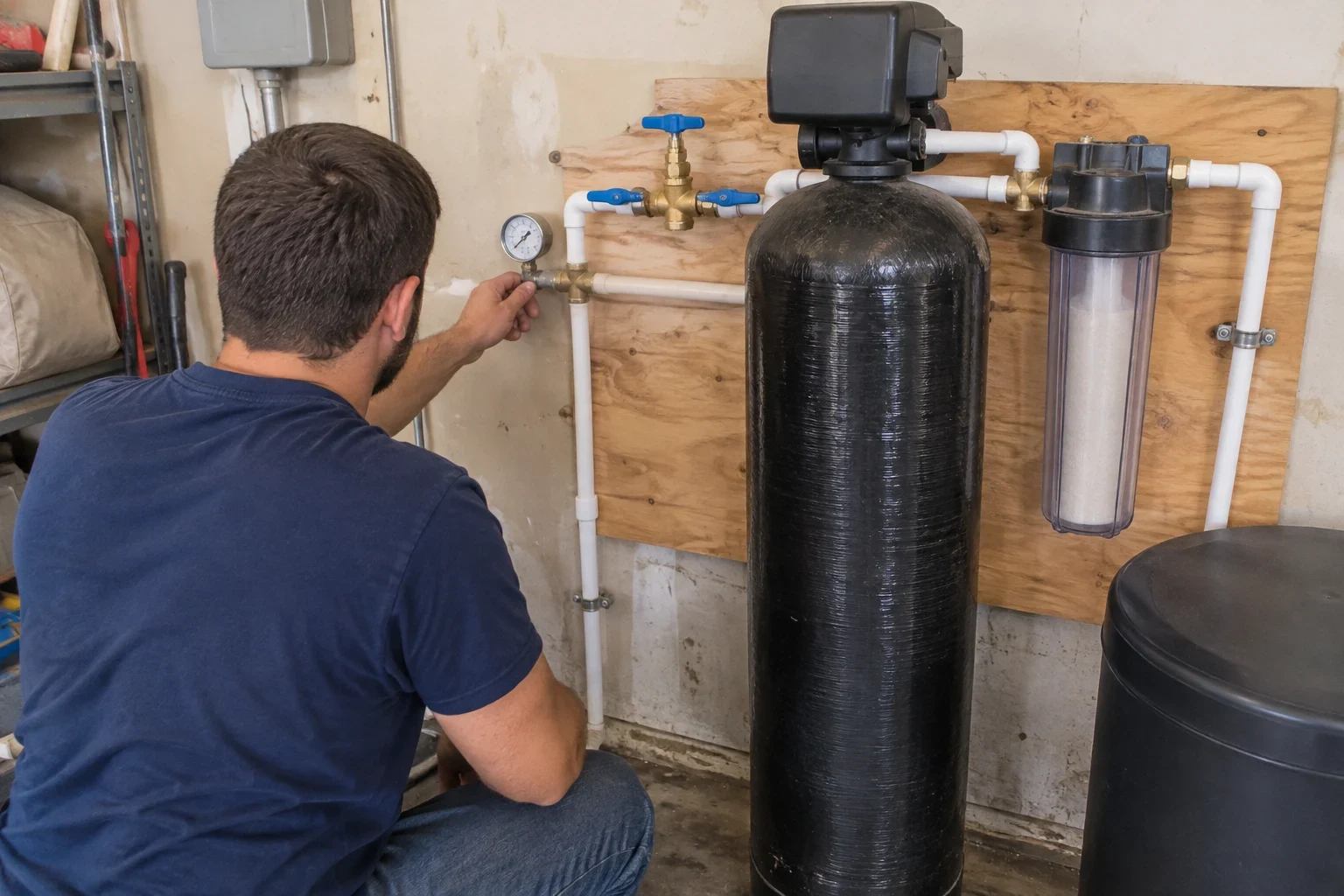
Sediment shields microbes from the light, and iron or hardness coats the quartz sleeve. We install at least a 5-micron sediment filter upstream and add iron or softening stages when your test shows they're needed.
- 03
Mounting with service clearance
The lamp and sleeve slide out the end of the chamber, so the unit needs open space equal to its own length. We mount it on a solid surface with proper brackets and leave that clearance so yearly lamp changes don't mean cutting pipe.
- 04
Bypass valves and unions
We plumb a three-valve bypass and threaded unions around the unit. You can isolate it for a lamp change or sleeve cleaning while the house still has water.
- 05
Power and alarms done properly
The ballast plugs into a dedicated, GFCI-protected outlet close by. Every unit we install has a lamp-failure alarm, and we can add a UV intensity sensor or an automatic shutoff valve if you want one.
- 06
Line sanitizing after startup
UV treats water from the unit forward, but it can't clean bacteria already living in the pipes downstream. After installation we disinfect the downstream lines and flush them, so the system starts with clean plumbing.
Questions about UV Water Purification?
Call(512) 379-5019Signs Your Home May Need UV Disinfection
A positive bacteria test
If a lab test finds total coliform or E. coli, the water needs disinfection. UV handles that without the taste or handling of continuous chlorination.
Water from a private source
Private wells, cisterns and rainwater systems aren't disinfected by a utility. Their quality can shift after heavy Central Texas rains, when surface water reaches the source.
Repeated boil-water notices
If notices keep interrupting your routine, a UV unit on the main line adds a disinfection step inside your home.
Someone in the home is vulnerable
Infants, older relatives and people with weakened immune systems are more sensitive to waterborne microbes. Some families add UV for that reason alone.
An old UV unit that's alarming or ignored
A lamp that has run past its rated hours still glows but may not deliver the needed dose. A cloudy, scaled sleeve does the same. If the alarm is beeping or no one remembers the last lamp change, the unit needs attention.
How a UV Job Runs
- 1
Water test and walk-through
We test for bacteria, iron, hardness, turbidity and other factors that affect UV transmittance. We also look at where the main line enters, where power is available and how much room there is.
- 2
Clear recommendation and quote
You get a written breakdown of the UV unit, any pretreatment and the plumbing work. If your water doesn't need UV, we'll say so.
- 3
Installation day
We shut off the water, plumb in the filter housings, bypass and UV chamber, then mount the ballast and route the cord neatly. Joints are pressure-tested before we restore full flow.
- 4
Sanitize, flush and walk you through it
We disinfect and flush the downstream lines, confirm the lamp and alarm are working, and show you how to use the bypass. We label the lamp install date on the unit so the next change is easy to track.
What Moves the Price of a UV System
Installation is free with your system, so your quote covers the equipment and any extra work your home needs. The biggest variable is usually what has to happen before the water reaches the lamp. We itemize each part so you can see what you're paying for.
- Flow rate and chamber size
- Chamber size follows peak demand. When three or four bathrooms can run at once, the unit has to be rated for more gallons per minute, which means a bigger chamber and a longer lamp than a two-bath house or a cabin calls for.
- Pretreatment required
- Clear water may need only a sediment filter. High iron, manganese or hardness can call for an iron filter or softener first, which adds equipment.
- Controller features
- A basic ballast with a lamp alarm costs less than a unit with a UV intensity sensor, a lamp-hour countdown or a solenoid shutoff valve.
- Plumbing and power access
- Tight spaces, rerouting the main line or adding a nearby outlet all affect the scope of the job.
Common Questions About UV Systems
Does UV improve how my water tastes?
No. UV kills microbes but leaves chlorine, sulfur odor, minerals and chemicals in place. For taste, combine it with carbon filtration or an under-sink reverse osmosis system. Your test results guide which equipment we suggest.
How often does the UV lamp need replacing?
Expect a new lamp about every twelve months of nonstop use. A worn lamp keeps glowing, yet its UV-C output drops below the dose that inactivates microbes, so seeing light proves nothing. Wipe the quartz sleeve at every lamp change, and more often if your water's minerals film it over.
What if the power goes out?
With no power the lamp goes dark, and any water used during that time is not disinfected. Where outages happen often, an automatic shutoff valve can block flow while the lamp is off. Once power is back, the lamp takes a short warm-up to reach full strength.
Is UV needed on city water?
Most of the time no, because city water is disinfected before it reaches you. Some households add it after several boil-water notices or to protect a vulnerable family member. A free water test helps you weigh whether it is worth adding.
Should I switch the unit off while I'm away?
We advise keeping it on. Turning a lamp on and off wears it faster than steady use, and a chamber without power can let bacteria take hold in the lines. It uses about as much power as an ordinary light bulb.
See Whether UV Belongs in Your Home
We test your water, look over your plumbing and power, and give you a plain answer on whether UV makes sense. If it does, you get an itemized quote with free installation.