ServicesWater Testing & Analysis
Water Testing & Analysis in Bastrop
Equipment should follow the numbers, not a guess. We measure hardness, iron, chlorine, pH and dissolved solids at your tap, explain what each reading means for your home, and give you a straight answer on whether any treatment is worth installing.
A test decides the equipment, not the other way around
Most water problems show up as symptoms: white crust on faucets, orange rings in the toilet, a bleach smell from the kitchen tap. Each symptom has more than one possible cause. White scale can be calcium hardness or high total dissolved solids, and a rotten-egg smell can come from the water itself or from the anode rod in your water heater. A test separates those causes so the fix matches the problem.
We take the sample carefully because sampling errors are the most common reason a test misleads. We draw from a cold tap upstream of any existing filter or softener, run it long enough to clear standing water from the line, and use clean containers that will not add their own residue. If a result looks off, we retest instead of guessing.
The outcome may be that your water needs nothing. If so, we say that. If it does need treatment, the numbers tell us how to size it, which media to use, and which equipment, such as whole-home filtration or a reverse osmosis system, actually fits.
What we check
Hardness, measured in grains per gallon
We measure calcium and magnesium and report them in grains per gallon, the figure softeners and conditioners are sized from. That one reading tells us whether a water softener or salt-free water conditioner is worth considering.
Iron and manganese levels
Even small amounts of iron stain fixtures and slowly foul softener resin. We test for iron and manganese so any equipment is planned around them and does not fail early.
Chlorine and pH readings
Free chlorine is checked for taste and odor complaints. We check pH because acidic water eats at copper pipe and can pull metals from old fittings into your drinking water.
Dissolved solids (TDS)
The TDS number is a fast snapshot of everything dissolved in your water. It also serves as a baseline for later confirming that a reverse osmosis membrane is doing its job.
Lab testing when needed
Concerns like lead from old solder or bacteria in a private well call for a lab, not a countertop test. We take the sample the way the lab specifies and explain the report once it arrives.
Results in writing
You receive written results, each value paired with what it means for your home. We never recommend equipment without a reading to back it up.
Signs it is time to test your water
Scale on fixtures and glass
White crust on shower heads or spotted dishes points to hardness or high dissolved solids. A test tells you which, and how much.
Orange, brown or black stains
Rust-colored rings suggest iron, while black streaks often mean manganese. Each calls for a different media, so guessing wastes money.
Odd taste or smell
A chlorine smell, a metallic taste, or a sulfur odor from the hot side only all have different causes. The test narrows it down before anything is replaced.
Older plumbing or a new house purchase
Homes with older copper and lead-based solder are worth checking for lead. Testing at purchase also gives you a baseline for the life of the home.
You were quoted a system without a test
If someone proposed a softener based on a glance at your faucet, get the numbers first. An honest answer may be a smaller system or none.
How a test visit runs
- 1
Talk through the symptoms
We ask what you are seeing, smelling or tasting, and where. Hot side only, one bathroom or the whole house each point somewhere different.
- 2
Pick the right sample point
We find a cold tap before any existing treatment, usually an outside hose bib or the kitchen line, and flush it so the sample reflects the supply, not water sitting in the pipe.
- 3
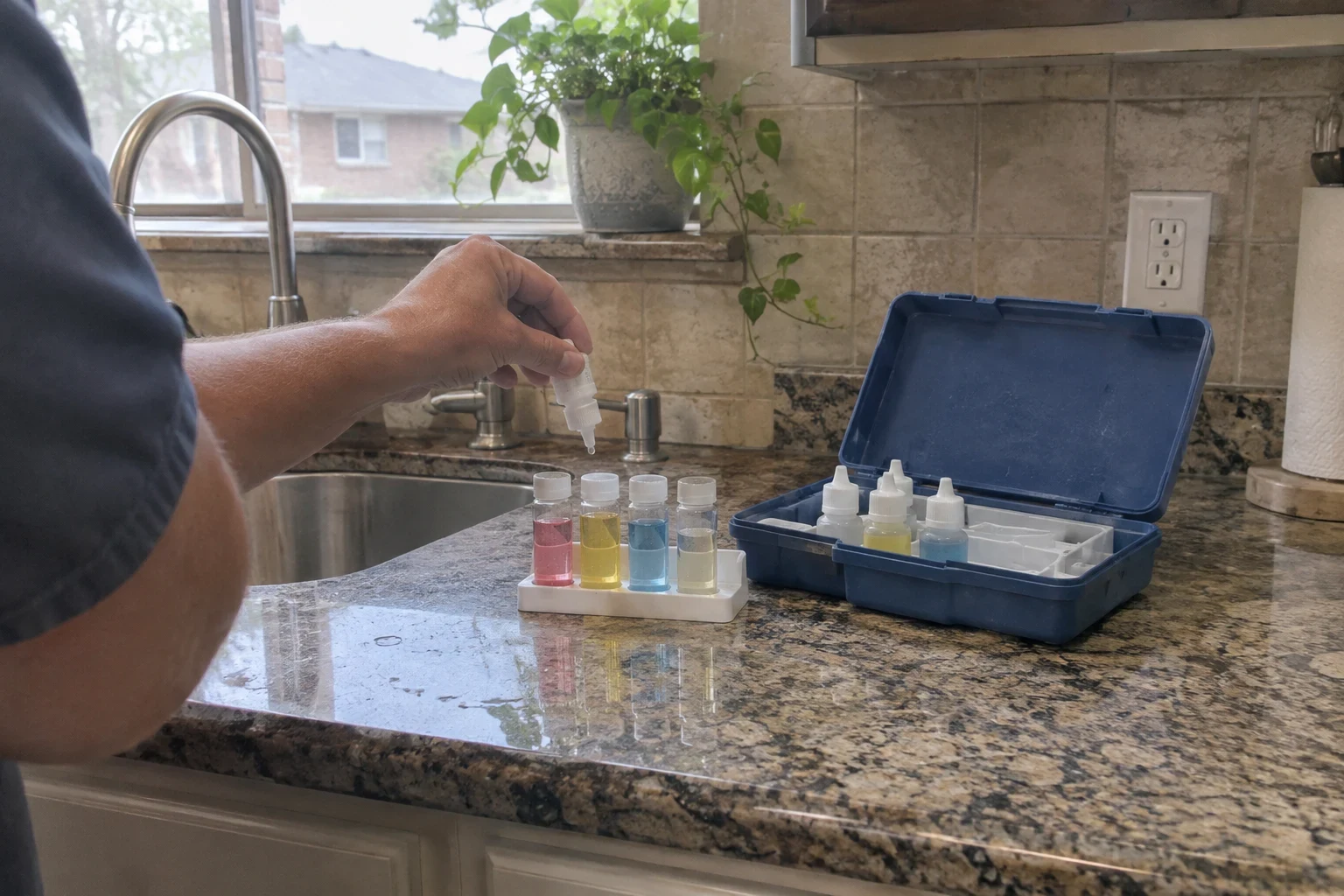
Run the tests in front of you
Hardness, iron, chlorine, pH and TDS are measured on site so you can see the readings yourself. Anything that needs a lab is bottled, labeled and kept cold for transport.
- 4
Go over the results
We explain each value and what, if anything, it calls for. If equipment fits, we give you a quote with the sizing and parts spelled out; if it does not, we tell you that.
What affects the cost of testing
The in-home test is free, and the quote that follows it is free too. Cost only comes into the picture when a question needs outside lab work. We tell you which tests are worth paying for before any sample leaves your home.
- Lab panels
- Lead, bacteria and other trace contaminants are measured by a lab, and the panel you choose sets the cost. We suggest only the panels your symptoms or plumbing justify.
- Number of sample points
- One kitchen tap usually tells the story. Comparing a hot tap, a bathroom or a second water source adds samples.
- Follow-up testing
- Rechecking after a system is installed confirms it is doing its job. That later test is part of commissioning any equipment we put in.
Questions about water testing
Something not covered here? (512) 379-5019
Is the test actually free?
Yes. Checking hardness, iron, chlorine, pH and dissolved solids in your home costs nothing, and you owe us no purchase afterward. Lab panels for concerns such as lead or bacteria are billed separately, and we explain them before you decide.
Can't I just use a test strip from the store?
Strips only give a rough color comparison, and small amounts of iron or hardness are easy to read wrong. They also cannot tell you whether the sample came from the right tap. Our readings are more exact, and we explain what each one means in plain words.
Will you push a system on me after testing?
We suggest equipment only when a reading supports it. Plenty of homes need nothing, or only an under-sink drinking water filter. When treatment makes sense, we quote it by phone or in person with sizing and parts listed, and installation is free.
Do you test homes outside town?
Yes. We test water in Bastrop and nearby, including Smithville, Elgin and Cedar Creek, for homes on city water and on private wells.
How long is the visit?
An in-home test usually takes well under an hour, including time to review the results with you. Lab results take longer, depending on the panel. When the report comes in, we go through it with you line by line.
Find out what is actually in your water
A short visit gives you real numbers and a straight answer about whether your home needs treatment. If it does, you get a clear quote to go with it.