ServicesWell Water Filtration
Well Water Filtration in Bastrop
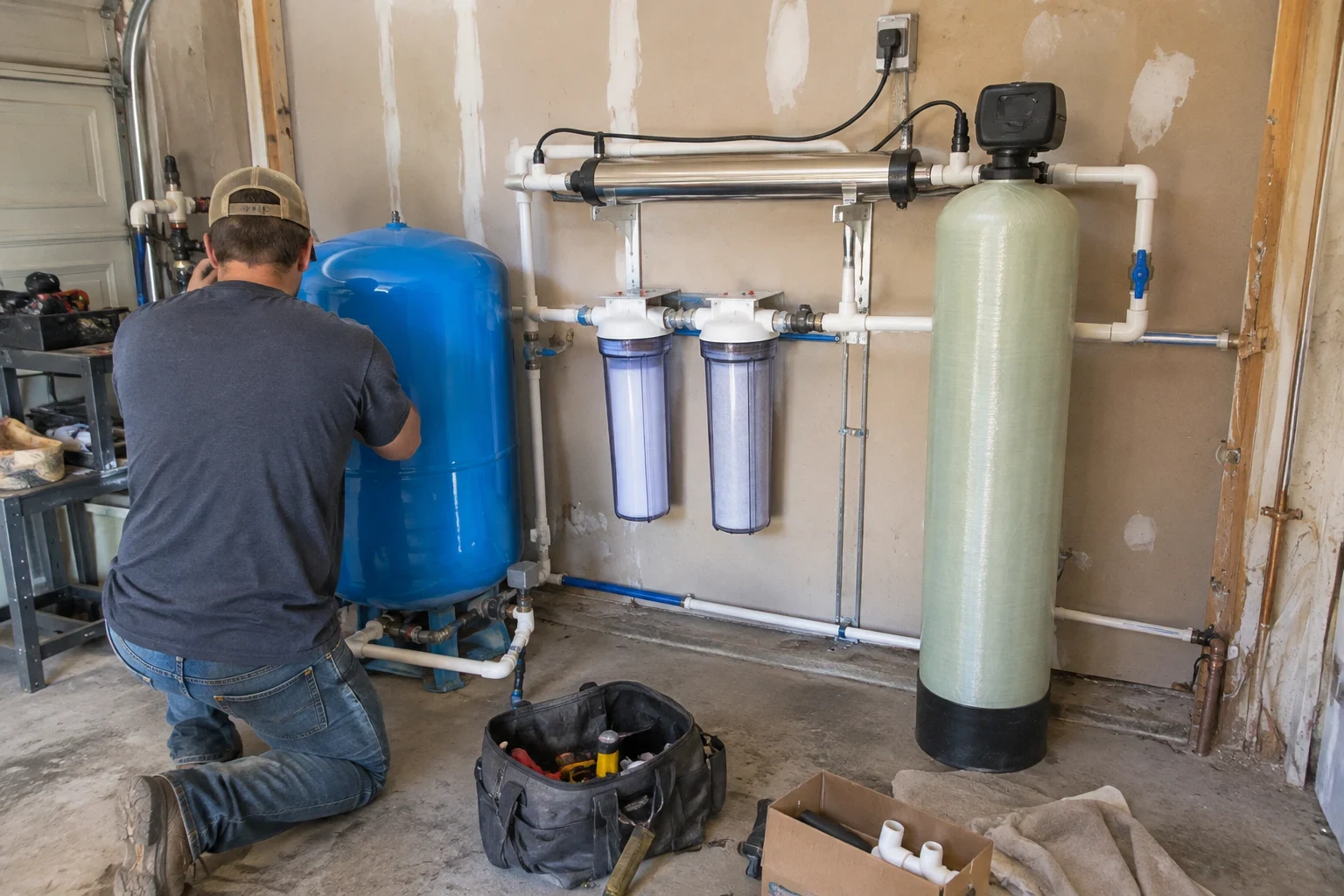
Private well water changes with the aquifer, the pump and the season. We test your water first, then build a filtration train sized to your well pump's real flow, with bypass valves, unions and a proper drain so each part can be serviced.
Well Filtration Sized to Your Pump and Your Test Results
Water from a private well reaches your taps just as the aquifer and the pump deliver it, with no utility plant treating it along the way. Sand, dissolved iron, manganese, hydrogen sulfide gas and occasionally bacteria travel up the drop pipe at the same time. Each one needs a different method, and the order of the stages matters as much as which stages are chosen.
We start by testing your water in detail. Then we size the equipment to two numbers that often go unchecked: the gallons per minute your pump really delivers and the backwash rate the filter media requires. A backwashing tank that gets too little flow never fully rinses its bed, and that is the most common reason well filters fail early.
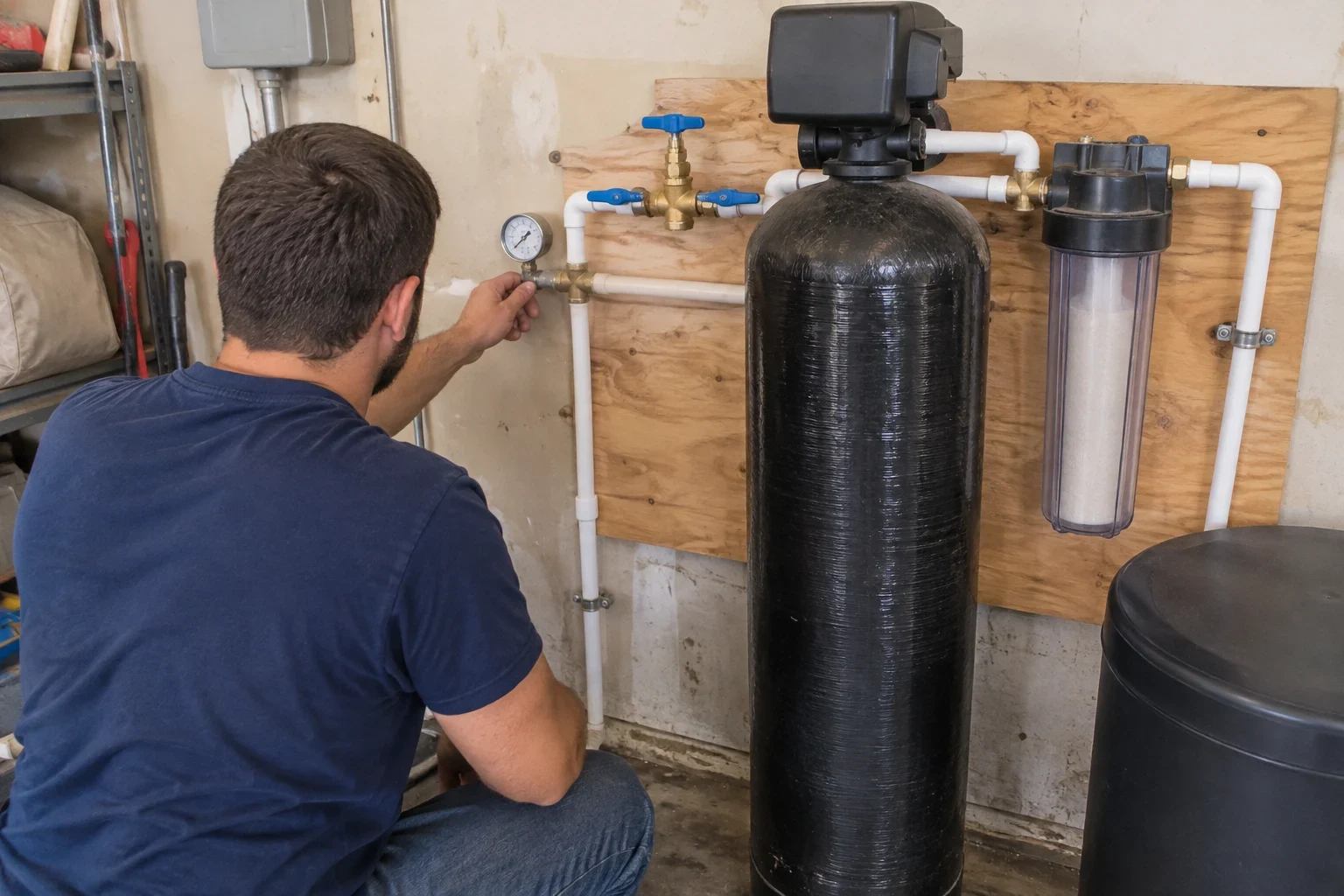
Small parts decide how long the install holds up. We add a full bypass, dielectric unions at every joint where copper meets steel, a drain line with an air gap, and pressure gauges before and after the filters, so a cartridge that is loading up shows on the dial before you feel it at the shower.
What Comes With a Well Filtration Install
- Testing plus a flow measurement
- Our test covers iron, manganese, hydrogen sulfide, hardness, pH and turbidity. We also time how fast a bucket fills at the pressure tank to find your pump's true output, since equipment sized off the box label can leave your shower short.
- A sediment stage up front
- A spin-down screen or sediment cartridge sits at the head of the line. It stops sand and grit before they damage control valve seals or clog a media bed.
- Stages chosen from your results
- Based on the test, this could be an air injection oxidizing filter for iron and sulfur, catalytic carbon for odor, a softener or a UV lamp. We tell you what each stage does and what you give up by skipping it.
- Plumbing built for service
- Each system has a three-valve or built-in bypass, unions on either side and isolation valves. Swapping a cartridge or removing a control head never means draining the whole house.
- Proper drain and power
- Backwash water goes to an approved drain through an air gap, so nothing can siphon back. Control valves and UV ballasts plug into a protected outlet, not a loose extension cord.
- Installation at no charge
- Installation is free. The quote covers the equipment and materials your setup calls for, listed item by item.
Signs Your Well Water Needs Filtering
Orange or brown staining
Rust-colored rings in toilets and on fixtures usually come from dissolved iron that oxidizes on contact with air. The same iron discolors laundry and can coat a water heater's anode.
Rotten egg smell
Hydrogen sulfide gas causes that sulfur odor. When you only notice it at hot taps, the water heater's magnesium anode may be reacting with sulfate in the water, and that needs a different fix than raw well water does.
Grit in aerators
Sand collecting in faucet screens and toilet fill valves means sediment is coming up from the well. Over time it wears valve seats and scores washing machine solenoids.
Black or slimy residue
A dark film inside toilet tanks can point to manganese or iron bacteria. Both build up inside pipes and plug fine filters quickly.
A failed bacteria test
Coliform in a well sample means the water needs disinfecting, and the source should be tracked down as well. UV purification placed after solid prefiltration is the usual answer.
What Moves the Price
Every well pulls different water, so your quote is built from your test results and the plumbing we find. Installation is free. What you pay for is the equipment, and that depends on how many problems the water has and how easy the system is to reach.
Your test results
Water that only carries grit can be handled with a single sediment stage. Add iron, hydrogen sulfide and coliform to the picture and you may need three or four stages, each with its own equipment.
Pump flow and household demand
Higher flow calls for larger media tanks and wider valve ports so pressure doesn't sag. A smaller tank is cheaper on day one but loses that savings when it can't backwash properly.
Access and pipe condition
A roomy pump house with sound pipe keeps the job simple. Cramped crawl spaces, rusted galvanized lines or a drain that sits far from the equipment take more fittings and more hours.
Power and drain needs
Electronic control heads and UV lamps need a protected outlet close by, and a backwashing tank needs a drain sized for the volume it dumps.
How the Job Runs
- 1
Sample and measure
We take samples at the pressure tank and at a tap, check how much your pump puts out, and record your pipe type and size. Then we explain the results in everyday terms.
- 2
Plan and price
We map out each stage, the reason for it and how it gets serviced. Every component appears on the quote, so you know exactly what your money buys.
- 3
Installation
We kill power to the well at the pressure switch breaker, tie in downstream of the pressure tank and set the equipment on a level, supported base. The lines get flushed before the media starts working, so no construction debris lands in it.
- 4
Startup and handoff
We program the backwash schedule, look for leaks at full pressure and test the treated water again. Before leaving, we show you the bypass, the gauges and when each cartridge or lamp needs replacing.
Well Water Filtration Questions
Will a filtration system lower my water pressure?
Each stage adds a little resistance, but a system sized correctly keeps the loss small. We match tanks and ports to the pump output we measure, then mount a gauge on each side of the filters. When the gap between them grows, you know a cartridge is ready to change.
How much maintenance does a well system need?
A sediment cartridge typically lasts a few months, and a sandy well will use them up faster than a clean one. Media tanks backwash on their own timer. UV lamps get swapped roughly once a year, and we wipe the quartz sleeve during that visit. You get a written schedule that fits your exact equipment.
Why test before buying anything?
Iron, manganese and sulfur each call for different media, and a few of them work against each other when paired badly. Guessing can leave you with equipment that never touches the real problem. Our water test is free, and its results decide what goes on your quote.
Where does the system go?
Most systems are plumbed in just past the pressure tank, in the pump house or garage, so every tap in your home gets filtered water. If you want extra polishing for drinking water, a reverse osmosis unit can go under the kitchen sink as its own step.
Does the system handle bacteria?
Filtration by itself does not kill bacteria. When a test shows coliform, we add UV purification as the final stage, downstream of sediment and iron removal, so the light passes through clear water and reaches everything flowing past it.
Learn What Your Well Is Pumping
Your water test is free. We also check your pump's flow and explain which stages your home really needs, and installation costs nothing.