ServicesWater Softener Installation
Water Softener Installation in Bastrop
We install ion-exchange water softeners sized from a hardness test of your own tap water, not a guess. The details that decide how long the system lasts get the most attention: the bypass valve, the drain air gap, the brine line and the valve settings.
How a softener works and when it makes sense
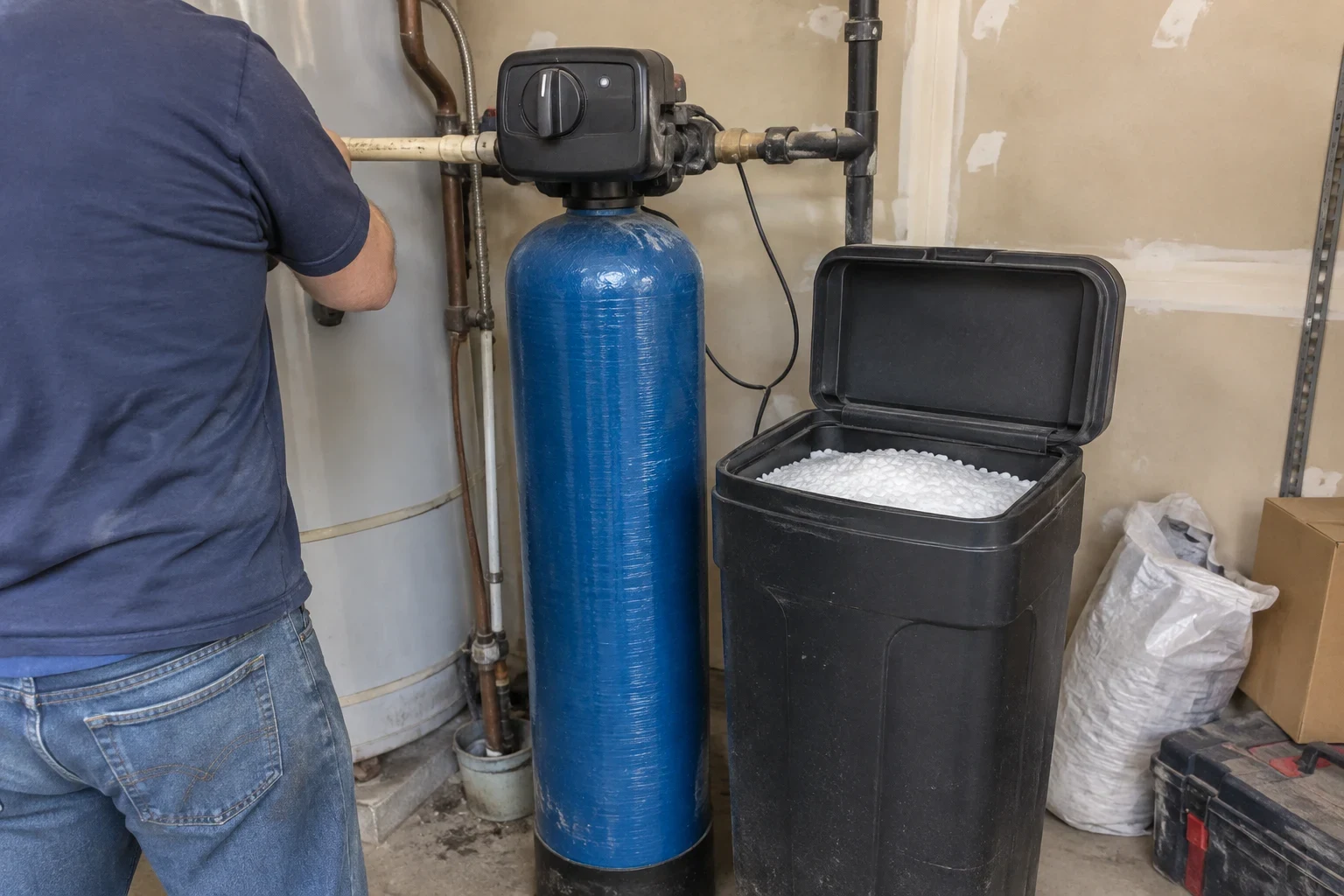
A softener pulls calcium and magnesium, the minerals that make water hard, out of your supply. Those minerals are behind the white buildup at faucet bases, the fog on shower doors and the scale that settles in your water heater. The mineral tank holds resin beads charged with sodium. As water flows past, the beads give up sodium and hold on to the hardness. Once the beads are spent, the control valve starts a regeneration, drawing brine from the salt tank to wash the resin and flushing the trapped minerals to drain.
It is only worth it when your hardness is high enough to cover the cost of salt, the water each regeneration uses and the regular upkeep. So we test before anything else. When the reading is low, we may suggest a salt-free water conditioner or whole-home filtration and tell you our reasons.
Softeners that quit early rarely have a bad brand behind them. The usual causes are a resin tank that was too small, regeneration set on a timer rather than real use, or a discharge hose without an air gap that let wastewater draw back toward the valve. All of these are settled on install day, so that is where our effort goes.
What you get with the install
Capacity based on your measured hardness
We multiply your hardness in grains per gallon by the number of people in the house and their usual daily use. The result is a grain capacity that has the unit regenerating every few days instead of nightly.
A bypass you can reach
Each softener gets a three-valve or factory bypass so the unit can be shut out for service while the house keeps its water. We place it within easy reach, not tucked behind the water heater or storage boxes.
Open air at the discharge
Rinse water leaves the valve through a hose during regeneration. That hose ends above a floor drain, standpipe or laundry box with a gap of open air before the drain opening, so wastewater cannot be pulled back into your supply. We clamp it so a strong flush will not shake it free.
Level salt tank with a routed overflow
We set the brine tank on a firm, flat base so the float and brine well read correctly. Its overflow fitting gets its own line to a drain, so a stuck float does not leave water on the floor.
Fittings matched to your pipe
We make a clean transition from copper, PEX or CPVC to the valve, and put dielectric fittings anywhere two different metals join. That holds off the joint corrosion that tends to appear years down the road.
Valve set up and shown to you
We program metered regeneration for your hardness and household size, then walk you through adding salt, using the bypass and reading the display.
Signs your home could use a softener
Chalky white crust on fixtures
When hard water dries, it leaves calcium carbonate behind. You see it as a white ring at the base of faucets and as clogged aerator screens and shower nozzles, and it reappears within days of scrubbing.
Spotty dishes and cloudy glass
Hard water leaves a mineral film that rinse aid can only partly hide. Softened water rinses off clean.
Soap that will not lather
Calcium and magnesium react with soap to form scum. You end up using more shampoo and detergent and still find residue around the tub.
A water heater that pops or rumbles
That noise usually comes from scale and sediment on the tank floor. The layer insulates the water from the burner or element, so every heating cycle uses more energy.
An old softener that is losing ground
Hardness returning, salt that never seems to drop, or a hard salt bridge across the brine tank all suggest trouble with the valve, the resin or the brine draw. Sometimes a repair fixes it, and we will tell you when that is the case.
How the work goes
- 1
Test and quote by phone
First comes a free water test for hardness and for minerals that affect a softener, iron in particular. Using those results and what we see of your plumbing, we give you a quote by phone and go over each line.
- 2
Choose the location
We pick a spot close to the main line with a drain and a standard outlet within reach. For garage installs we plan insulation on any exposed pipe, because a hard freeze can split a valve body.
- 3
Install and pressure check
With the main shut off, we fit the bypass and the inlet and outlet connections, route the discharge hose and the brine tank overflow to drain, and set both tanks in place. Pressure comes back on gradually while we watch every joint for weeps.
- 4
Start up and verify
We add salt, trigger a manual regeneration and test softened water at a faucet to confirm the hardness number has fallen. Then we clean the work area and show you the controls before we go.
What affects the price
Installation is free, so most of your quote covers the equipment and any plumbing changes your home needs. Past that, the number comes from your test results and how your pipes run. We walk through each line of the quote with you, so you know what every item is for.
- Grain capacity
- Harder water and more people in the house mean more resin. An undersized tank costs a bit less on day one, then uses more salt and wears faster because it regenerates so often.
- Timer or metered valve
- A clock-driven valve runs its cleaning cycle on set days, even if the resin still has plenty of capacity left. A demand-initiated valve reads actual gallons through a meter and waits until the resin is used up. It costs more at purchase, but over the years it uses less salt and less rinse water.
- Pretreatment needs
- If the test shows iron or sediment, a prefilter may be needed to keep the resin from fouling. Heavier iron readings call for iron and sulfur removal ahead of the softener.
- Plumbing access
- A hard-to-reach main line, or a spot with no drain nearby, takes more pipe, more fittings and more hours of labor.
Water softener questions
Something not covered here? (512) 379-5019
Will soft water taste salty?
Not at normal hardness levels. The sodium added is proportional to the hardness removed and is usually too low to taste. If you want drinking water without it, a reverse osmosis system at the kitchen sink removes most of the sodium.
How often will I add salt?
It depends on your hardness, your water use and the valve settings. A properly sized, metered system regenerates only when needed, so salt use stays steady and predictable. Check the tank monthly and keep it at least a third full.
Should my outdoor spigots be on soft water?
Usually not. Watering the yard with softened water wastes salt and capacity. We often leave hose bibs on hard water when the plumbing allows it, and we will tell you on the visit whether yours does.
Is a salt-free conditioner a better choice?
It can be if your goal is reducing scale on fixtures and appliances without a drain line or salt. A conditioner does not remove the minerals, so you will still see some spotting. Your test results help decide which fits.
Can you replace my old softener in the same spot?
Often yes. We check the existing bypass, drain and overflow first, because an old install can hide a missing air gap or a corroded fitting. We correct those so the new unit starts on sound plumbing.
Find out if your water needs a softener
A single call sets up a free water test and a quote. If your hardness is too low for a softener to be worth it, we will say so directly and suggest what would work better.