ServicesReverse Osmosis Systems
Reverse Osmosis Systems in Bastrop
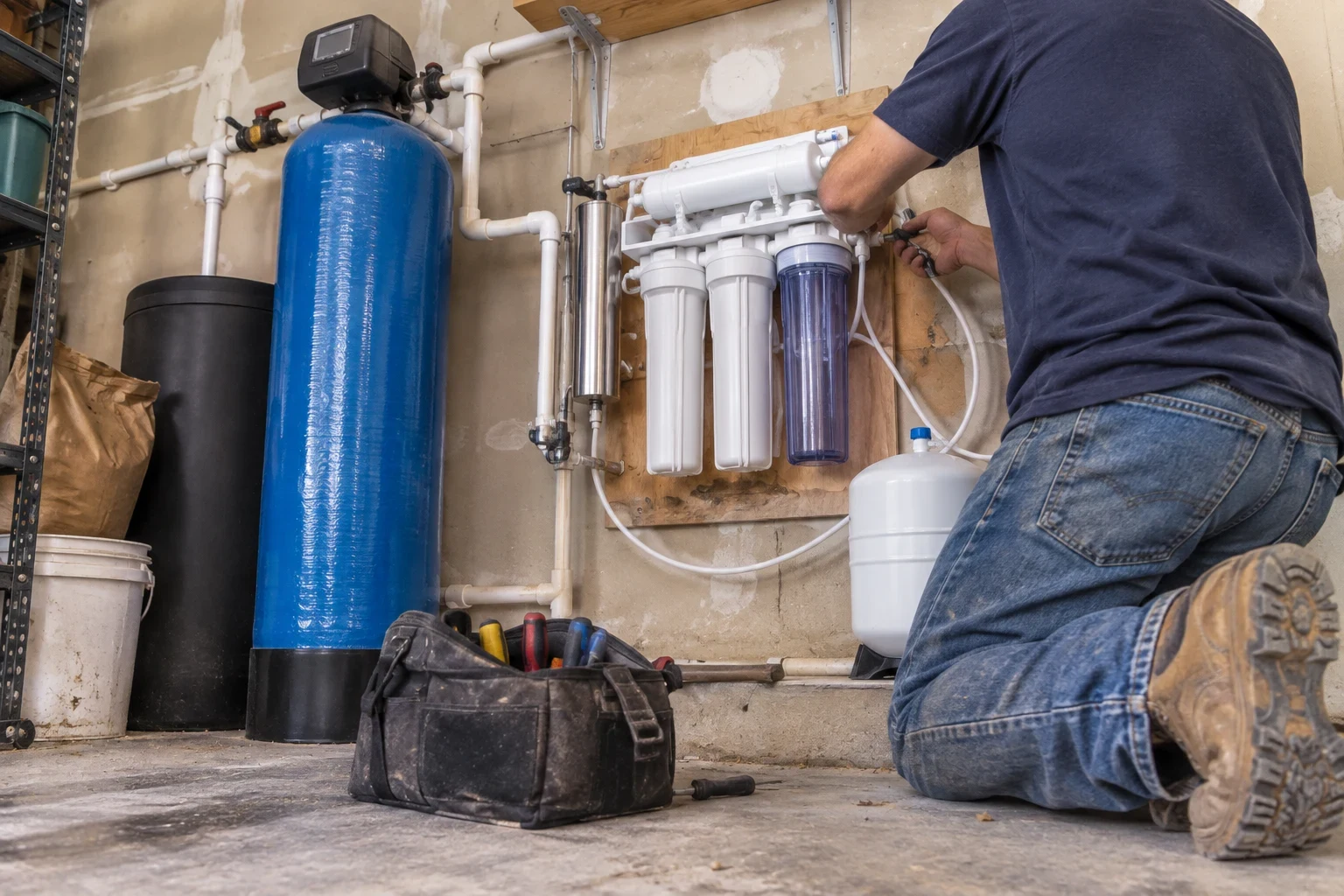
We install under-sink reverse osmosis systems that give your home clean drinking and cooking water from a dedicated faucet. The membrane does the filtering, but the fittings, drain connection and tank setup decide whether it stays dry and productive for years.
What a reverse osmosis system does and when it fits
Inside an RO unit, line pressure pushes water against a semipermeable membrane. Water molecules slip through, while most dissolved solids are held back and flushed to drain, including lead from older household plumbing, nitrates and the salts that make coffee and tea taste flat. A sediment prefilter and a carbon block protect the membrane upstream, and a carbon postfilter polishes the water as it leaves the storage tank.
The system sits under one sink and serves one faucet, so it is meant for drinking and cooking water rather than the whole house. To take chlorine taste out of every tap and shower, whole-home filtration does that job, and plenty of homes run both.
Most RO trouble we see around Bastrop comes from the install, not the membrane: a drain saddle mounted under the trap, tubing with a kink in it, a storage tank charged to the wrong air pressure. Those are the parts that fail first, so that is where we put our attention.
What our installation includes
Feed water connection
An angle stop adapter goes on the cold supply, so your kitchen faucet works just as it did. The RO line gets a separate shutoff, letting you service the system while the sink stays in use.
Drain saddle above the trap
We clamp the drain saddle to the sink tailpiece above the P-trap, never under it. In that spot the trap's water seal stops sewer gas and the reject water drains freely instead of backing up.
Square-cut tubing and stiffeners
Each quarter-inch line is cut with a tubing cutter rather than a knife and pushed all the way into its fitting. Angled or ragged cuts cause more slow cabinet drips than anything else.
Dedicated faucet
A spare hole in the sink deck, left from an old sprayer or soap pump, is the first place we look to mount the RO faucet. When there is no spare hole, we drill a clean one through the countertop. You can also choose an air gap faucet for an added barrier between the drain line and the system.
Tank charge and first flush
Before filling the storage tank, we check the pressure in its air bladder. The first full tank carries carbon fines and membrane preservative, so we run it to drain rather than to your glass.
Before-and-after TDS reading
We take a total dissolved solids reading at your regular tap and at the RO faucet and show you both. Those numbers are your baseline for judging when the membrane is due.
When an RO system is worth it for your home
Bottled water is a weekly errand
When tap water tastes off and the cases keep piling up in the pantry, an RO faucet generally costs less over time and ends the hauling.
Coffee and tea taste dull
Heavy dissolved minerals mute flavor. Coffee and tea brewed with RO water taste cleaner, and many people notice from the first cup.
Older plumbing in the house
Lead usually comes from old solder and brass fixtures inside the home, not from the utility's supply. RO membranes are rated to reduce lead, and a water test shows whether it is something you need to address.
Crust building up in the kettle
White scale in a kettle or coffee maker is a sign minerals are getting through. RO pulls most of them out before they reach the appliance.
Ice comes out cloudy
Dissolved solids and trapped gas make ice cloudy. An RO line run to the refrigerator gives you clearer cubes and better water from the door dispenser.
How the install day runs
- 1
Look under the sink first
We check the cabinet space, the shutoff valves, the drain layout and your incoming water pressure. Membranes work best around 40 to 60 psi, and lower pressure may call for a permeate or booster pump.
- 2
Mount and connect
The filter housings mount to the cabinet wall high enough to clear the drain, and we run tubing in gentle curves without sags or kinks. If you want a refrigerator line, we route it now.
- 3
Pressure test and flush
We open the feed slowly, check every fitting for weeping, and run the first tank to drain. Then we let the tank refill and recheck the connections under full pressure.
- 4
Walk you through it
We show you the shutoff, the filter order and the TDS numbers, and leave a dated label on the housings so you know when each cartridge was installed. The cabinet is wiped dry and cleared of packaging before we leave.
What sets the price of an under-sink RO system
Because we install for free, the figure we give you by phone is mainly the equipment plus any added parts your kitchen needs. Beyond that, the system you pick and the layout of your sink cabinet decide the price. We explain each line before anything is ordered.
- Number of stages
- Our 5-stage tank reverse osmosis system (sediment, GAC, carbon block, RO membrane and post carbon, with an under-sink storage tank) is the lower-priced choice, and our tankless reverse osmosis system (800 gallons per day, 7 stages) is the upgrade. A remineralization cartridge or UV stage adds cartridges and takes up more cabinet space.
- Water pressure coming in
- When pressure is low, the membrane works slower and more water goes to drain, so a pump may be needed to hold output up. That adds a part, and it sometimes needs a nearby outlet.
- Your countertop material
- Using a hole that is already there adds nothing. Quartz and granite call for a diamond core bit and take more drilling time than laminate.
- Fridge line or second faucet
- A line to the refrigerator is priced on its length and path, whether it runs through cabinets, under the floor or along a wall.
Common questions about reverse osmosis
Something not covered here? (512) 379-5019
How much water does an RO system send down the drain?
A typical system sends several gallons to drain for every gallon it produces, and the exact ratio shifts with pressure and water temperature. Proper pressure and a working automatic shutoff valve hold that waste down. Adding a permeate pump improves the ratio noticeably.
Does RO remove the minerals I want in my water?
It does strip out most dissolved minerals along with the contaminants. Food supplies most of the minerals your body takes in, not drinking water. If you like the taste of mineralized water better, we can put a remineralization cartridge after the tank.
What maintenance does the system need, and how often?
The sediment and carbon prefilters are the routine part, usually replaced every six to twelve months depending on how much sediment and chlorine reach them. The membrane is slower to wear, typically lasting two to four years based on your water. When the TDS reading at the RO faucet starts climbing toward the baseline we recorded at install, the membrane is telling you it is time.
Should I test my water before buying a system?
It is a good idea. A free water test tells us what is really in your water, so we can say whether RO by itself is enough or whether whole-home filtration or a water softener should come first. Ask for the test on the same call where you get your quote.
Where does the storage tank go?
Most of the time it sits in the sink cabinet next to the filter housings. When a disposal or deep basin eats the space, we can set it in the cabinet next door and run a slightly longer line.
Ready for better water at the kitchen tap
We install RO systems in Bastrop and nearby towns like Elgin, Smithville and Cedar Creek. One phone call gets you a free quote, and a free water test if you want to know what is in your water first.